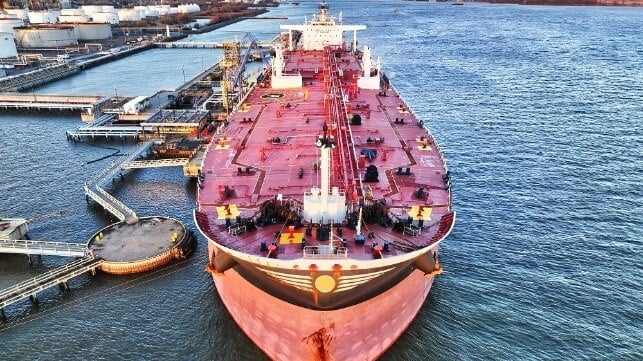
With Democrats back in control of the House and the Senate, American shipping stakeholders will have a new set of leaders to petition on the issues that matter most - starting with the Jones Act, a perennial point of contention between the American petroleum industry and the American domestic shipping industry, including its shipowners, mariners and shipbuilders.
In parallel with the Iran conflict, the Trump administration enacted a historically-long waiver of the Jones Act for domestic energy cargoes, arguing that it could reduce the price of fuel at the pump. Independent analyses suggest that - while retail gas and diesel prices have fluctuated dramatically over the course of the year - the practice of allowing oil companies to charterer foreign-flag tankers for domestic routes has had no discernible effects on the American consumer. Critics have also questioned the national security waiver's legality, as it is unclear if the cargoes have been delivered to solve an "immediate adverse effect on military operations," as is required by the text of the statute.
Authority over the waiver lies in large part with the White House, and advocacy efforts have centered on attempting to prevent each periodic extension (now totaling 250 days). The administration's waiver comes up for renewal on November 15, and an campaign is under way to ask the White House to allow it to lapse.
"Allowing the waiver to expire is essential to avoid unintended consequences that constrain investment in the recapitalization of the American maritime industry and the growth of the American maritime workforce," said the American Maritime Partnership's Jennifer Carpenter in a statement on Tuesday. "More than 28 percent of reported waiver voyages were on vessels or companies directly tied to China, including COSCO vessels linked to alleged intelligence-gathering activity. Foreign vessels gained access to sensitive U.S. waterways and critical American cargo, while foreign companies profited and Americans saw no benefit at the pump."
On the other side of the question, the American Petroleum Institute (API), the voice of oil and gas in Washington, has "applauded" the long waiver period. Its policy platform calls for easing the emergency-waiver process and creating legal "triggers" that would turn on a new waiver whenever there are "prolonged regional fuel supply shortages, significant inventory drawdowns, refinery outages, transportation disruptions, or sustained price spikes."
Policy decisions about the Jones Act - and the power for detailed scrutiny of its implementation - also lie with Congress. After the current session of Congress ends in December, the Democratic Party will assume control of the House and Senate. One of the most active voices in questioning the wisdom of the waiver, Rep. Salud Carbajal (D-WA), is set to inherit the chairmanship of the Subcommittee on Coast Guard and Maritime Transportation in January. As chairman, Carbajal will have the power to set the subcommittee's agenda.
Carbajal's recent advocacy could provide a preview of the line of questioning the subcommittee might pursue next year. His staff began reaching out to foreign owners and operators in June, asking for details on how they were using the waiver process. In mid-October, Carbajal wrote to the Department of Homeland Security to ask about the non-disclosure of at least 25 waivered voyages, raising questions about "whether DHS and its component agencies are adequately enforcing federal law with respect to foreign vessels operating in U.S. domestic commerce." He has also raised questions about whether waivered-voyage operators have fully complied with U.S. tax law and immigration regulations.